
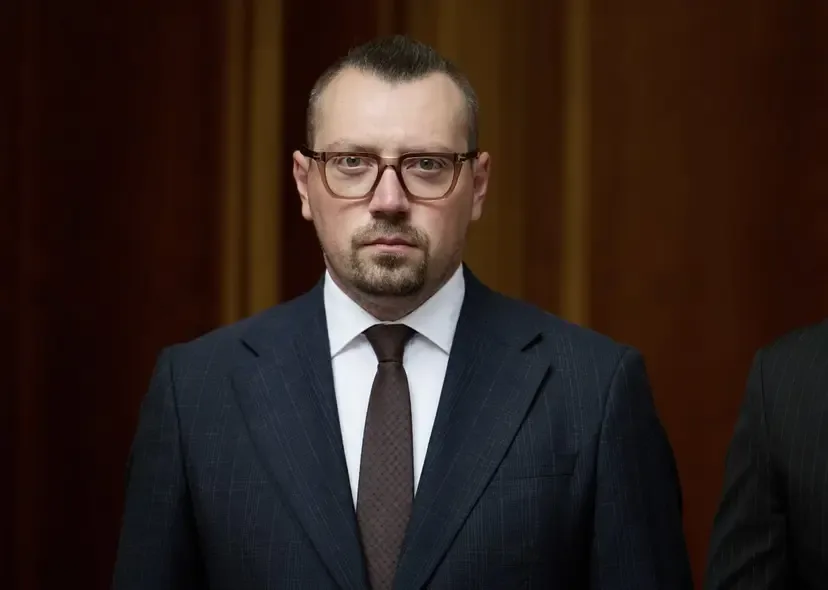
Vitaliy Bezgin, Ukraine’s Minister of Communities, Territories, and IDPs, spoke in an interview with “Glavkom” about key changes in government policy regarding internally displaced persons, housing programs, and the Ministry’s work following the redistribution of powers among government agencies.
On the Work of the Newly Created Ministry of Regional Development
At the beginning of the new government’s term, we adopted two regulations that, in principle, delineated the spheres of authority. We have now achieved full legal independence, as our Ministry is not the legal successor to the previous one and is being established from scratch.
As of now, five out of six deputy ministers have been appointed, and over 100 people have been hired—that is, more than 30% of the staff, which is the regulatory requirement for full legal autonomy. There are no obstacles to cooperation with the Ministry of Infrastructure in this process.
The reorganization of the ministries does not mean that projects already underway will be halted or that people will lose their right to state support. Programs previously coordinated by the Ministry of Development continue to be implemented within the purview of the Ministry of Regional Development and the Ministry of Infrastructure.
For example, “eRecovery.” The state continues to pay compensation for damaged housing and to fund housing certificates. The implementation of other programs and projects is also continuing. We are conveying this to our partners as well: we are fully ensuring continuity in management, fulfilling our obligations to people and communities, and continuing to secure funding from the state budget and international partners.
Regarding the Status of IDPs and Changes in the New Law
We must ensure a clear and fair registration process that reflects the real-life circumstances and needs of internally displaced persons.
The key aspect of the new Law on IDPs, which took effect on October 22, is the shift from simply registering IDPs to systematically addressing people’s needs. The previous law is more than 10 years old. During this time, both the scale of displacement and the challenges people face have changed. A registration certificate and a living allowance do not solve issues related to housing, employment, access to healthcare, or social services. A comprehensive approach to supporting IDPs is needed: from evacuation and needs assessment to their integration into a new community or, if it is safe, their return home.
To achieve this, we will be changing the way we handle data. We plan to create a unified IDP database and an online portal containing each person’s complete displacement history and their specific current needs. For some, employment is the most critical issue, while for others, it is social services. Launching such a database should simplify individuals’ interactions with the government and eliminate the need to repeatedly gather the same documents.
Funding for Housing Programs
The 2027 state budget is still in the process of being approved. The Ministry has prepared a budget request that provides for funding key housing programs through both the state budget and support from international partners.
The total funding for housing programs for 2027 in the budget request amounts to 30.5 billion UAH—10.8 billion UAH more than in 2026. Support across all areas will benefit more than 50,000 people.
Specifically, 3.4 billion hryvnias are allocated for compensation for damaged housing, and 17 billion hryvnias for destroyed housing. Of this amount, 11.5 billion hryvnias are allocated from the state budget, and another 5.5 billion hryvnias are provided with support from the Council of Europe Development Bank.
UAH 10.1 billion is allocated for housing vouchers for internally displaced persons from temporarily occupied territories. Of this amount, UAH 8 billion comes from domestic funds, and another UAH 2.1 billion is provided by the Council of Europe Development Bank.
At the same time, the actual need for funds significantly exceeds the allocated amounts, particularly for programs providing compensation for destroyed housing and housing vouchers for IDPs from temporarily occupied territories. Therefore, the ministry is working at all levels—with the government, parliament, and international partners—to ensure stable, predictable, and sufficient funding for housing programs.
Another area of focus is the development of social housing. The Ministry is working on a project supported by the European Investment Bank in the amount of 100 million euros. It involves the pilot construction of social housing in two or three selected communities.
For more details, follow the link.
This is the first part of the interview. The second part of the conversation will focus on community development and current challenges facing local self-government.