

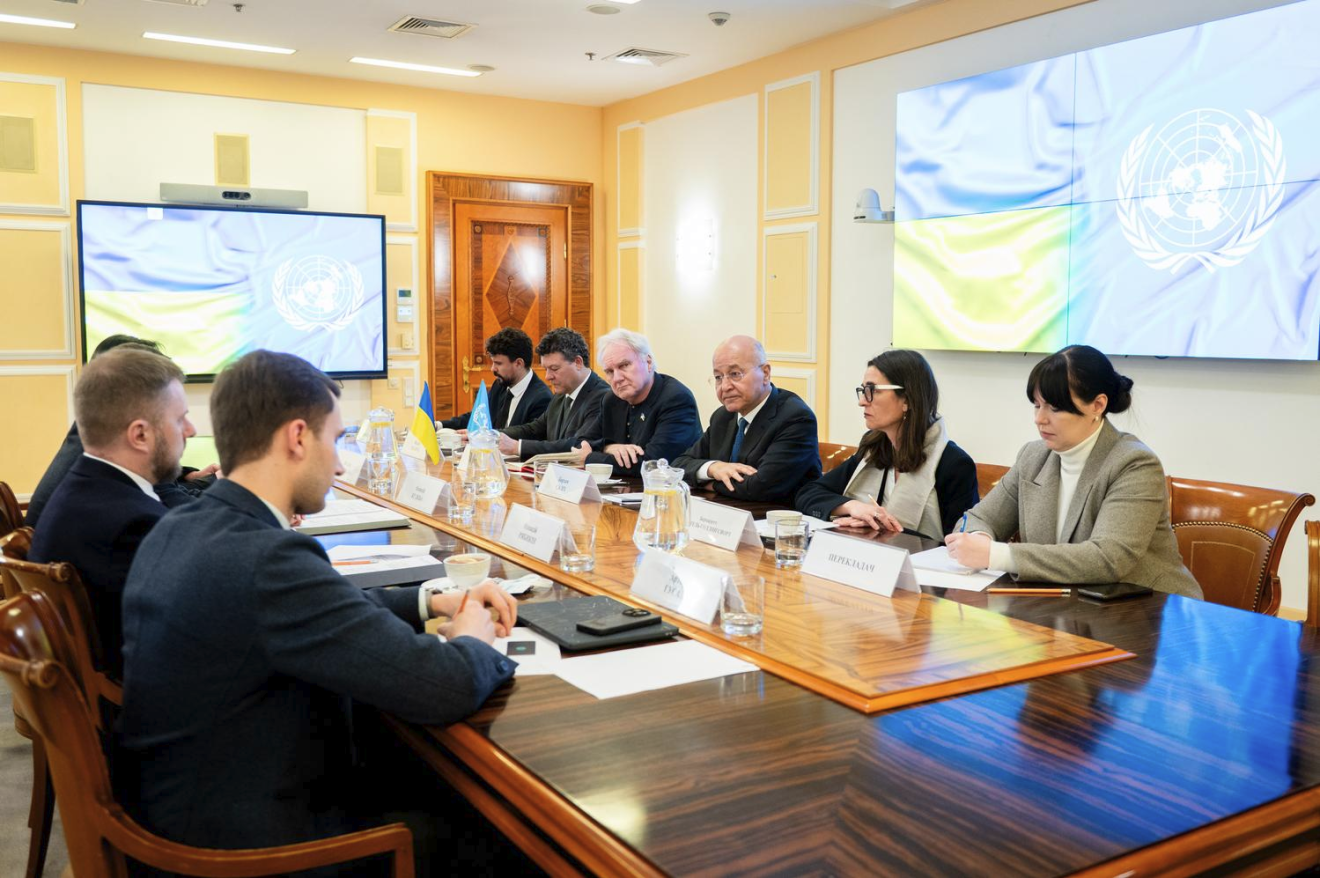
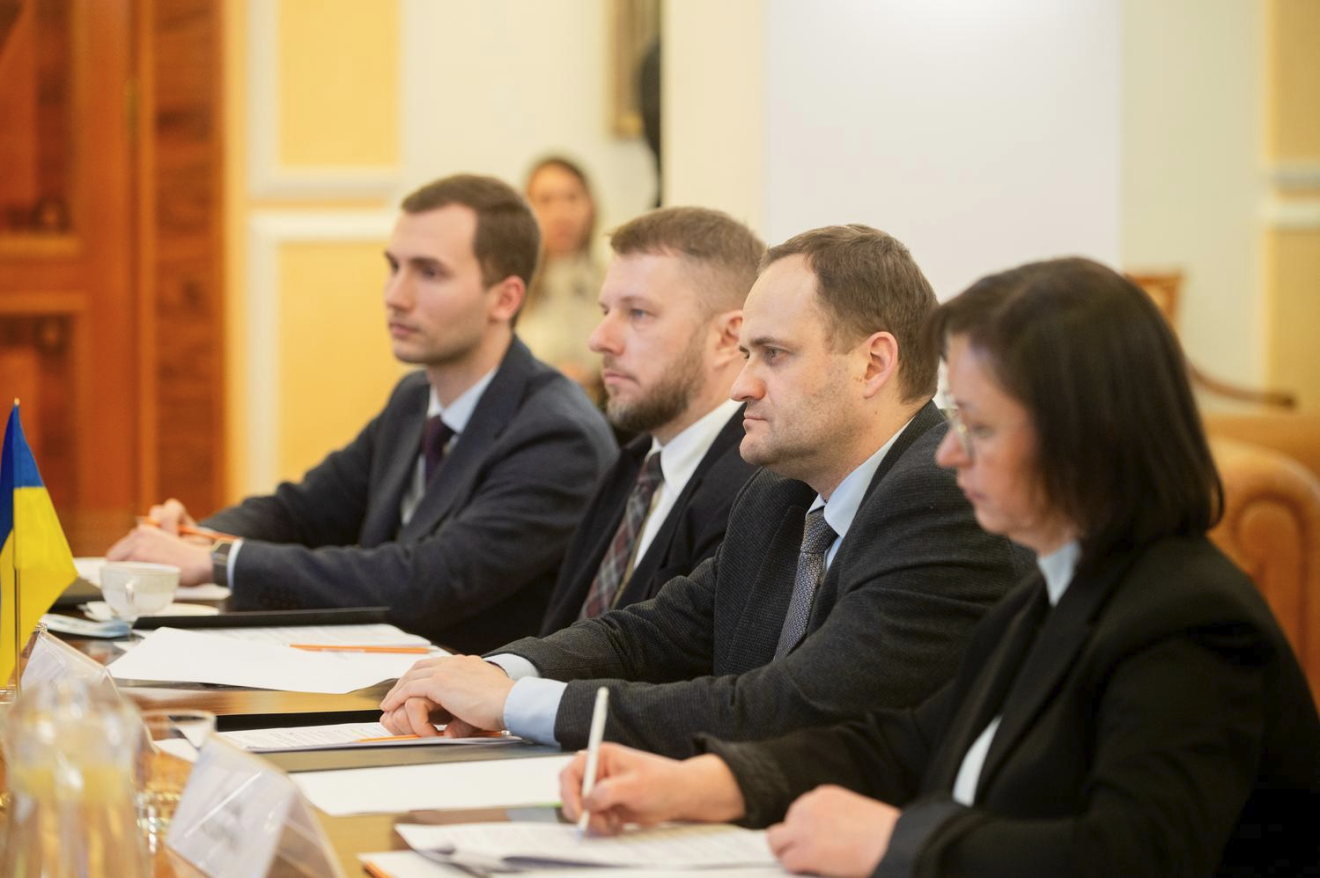
Deputy Prime Minister for the Restoration of Ukraine – Minister of Community and Territorial Development of Ukraine Oleksiy Kuleba held a meeting with UN High Commissioner for Refugees Barkham Salih. The meeting was also attended by Deputy Minister of Community and Territorial Development of Ukraine Nataliya Kolovska and Deputy Minister of Community and Territorial Development of Ukraine Oleksiy Ryabikin.
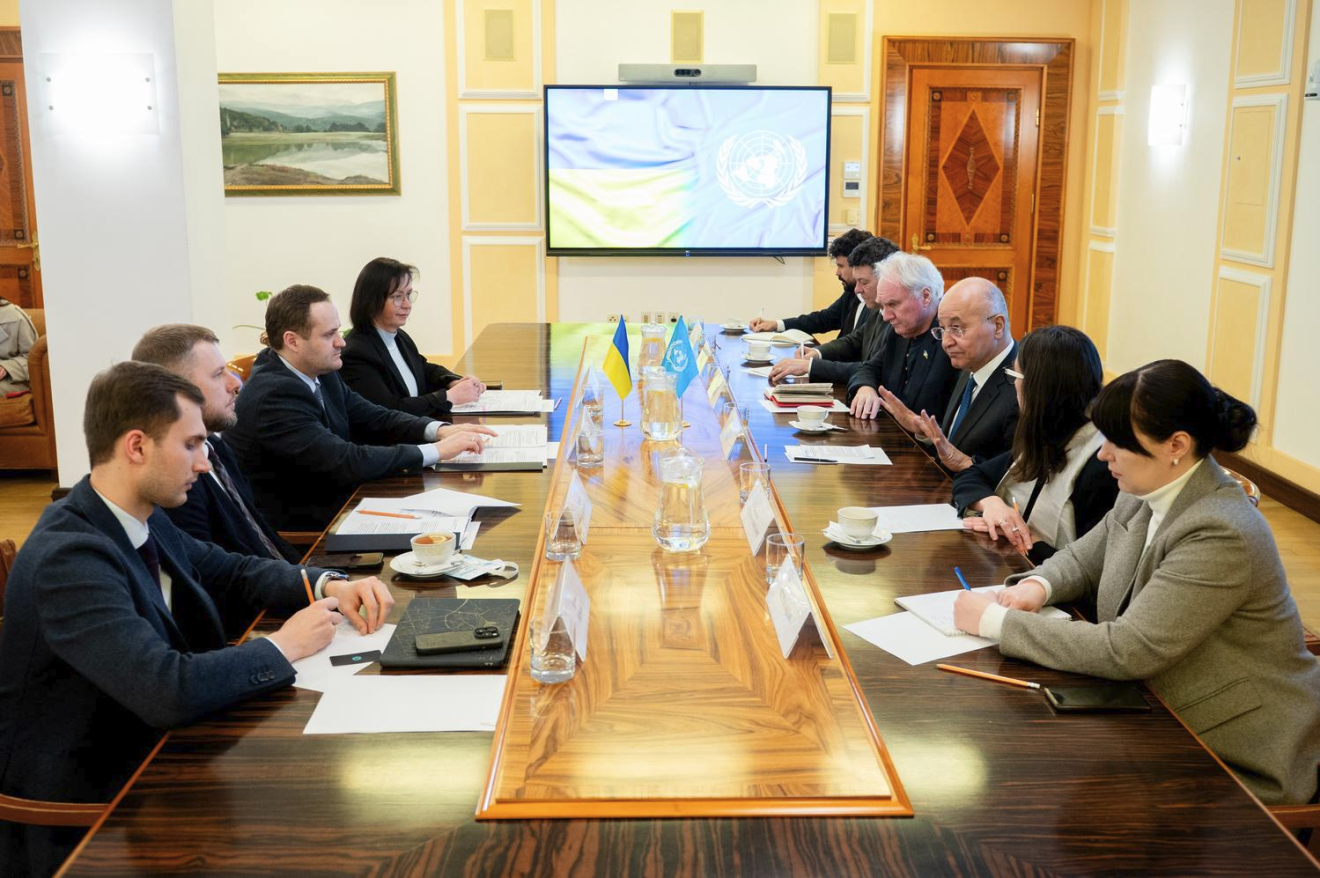
During the conversation, the parties discussed priorities for cooperation: support for civilian evacuation, the work of transit centers, support for internally displaced persons, the development of a social housing system, and further cooperation in the field of reconstruction and housing solutions.
“Today, Ukraine faces serious challenges, including the evacuation of people, the provision of housing, and the restoration of communities. The support of the UN is very important, first and foremost for our people. We sincerely appreciate the work of UNHCR in providing humanitarian assistance and supporting recovery. We look forward to continuing to work together on long-term solutions for internally displaced persons and affected communities,” said Oleksiy Kuleba.
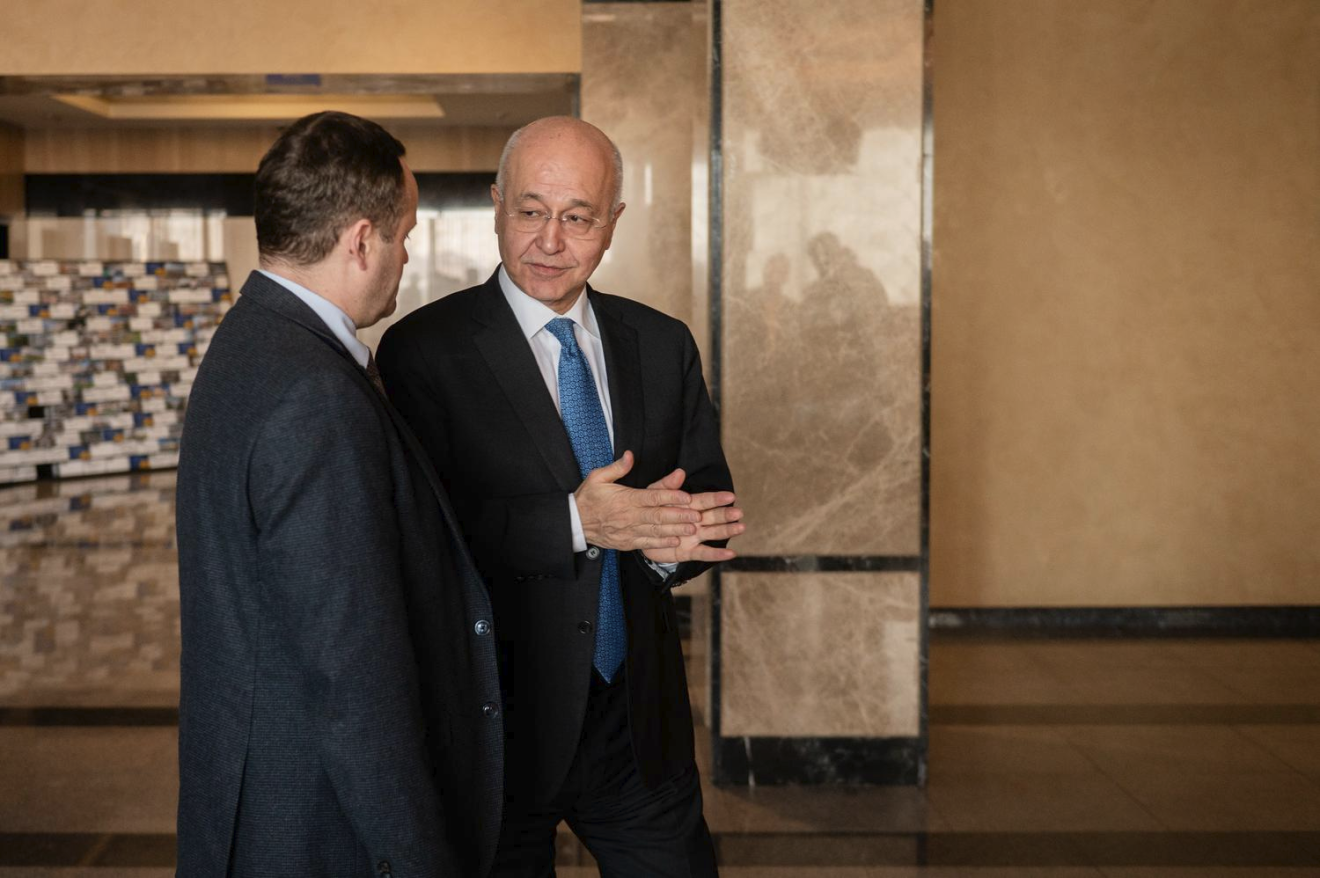
Special attention was paid to the development of housing policy as one of the strategic areas of cooperation. More than 4.6 million internally displaced persons are in need of housing. In January, the Law “On the Basic Principles of Housing Policy” was adopted, systematic reform of the housing sector is ongoing, and a State Strategy for Housing Policy and a digital information and analytical housing system for IDPs are being developed. The expert support of the Office of the United Nations High Commissioner for Refugees is important in this work.
UNHCR is the largest provider of humanitarian aid to Ukraine among all UN agencies. Since the start of the full-scale invasion, our country has received approximately US$2.9 billion from UNHCR. Of this amount, approximately $1.7 billion was allocated to support internally displaced persons and the most affected communities, and approximately $1.2 billion was allocated to assist temporarily displaced Ukrainians abroad.
Since March 2022, UNHCR programs have reached millions of citizens: 4.32 million people in 2022, 2.63 million in 2023, over 1.66 million in 2024, and over 1.25 million in 2025.
Approximately 2.4 million people have received cash assistance totaling US$721 million, and hundreds of thousands of people have received legal and psychosocial support. In particular, since March 2022, UNHCR and its partners have provided assistance to more than 882,000 people in frontline communities in Donetsk, Kherson, and Kharkiv regions.
In addition to humanitarian aid, UNHCR actively supports recovery in Ukraine. Among the main areas of focus is the repair and reconstruction of damaged housing: since 2022, more than 50,000 private houses and apartments have been repaired, and nearly 600,000 people have received building materials. Thirty-seven collective centers for IDPs have also been repaired.
A separate area of focus is support for employment and small businesses: grants, training, retraining, and material and technical assistance to communities and civil society organizations. In 2024, hundreds of organizations received financial and technical support, and projects to strengthen economic resilience reached nearly 7,000 internally displaced persons.
In February 2025, UNHCR began developing an information and analytical system for recording real estate properties, aimed at accelerating the process of providing housing for internally displaced persons.
The Ministry looks forward to further cooperation with UNHCR in housing rehabilitation, combining humanitarian assistance with long-term government decisions.
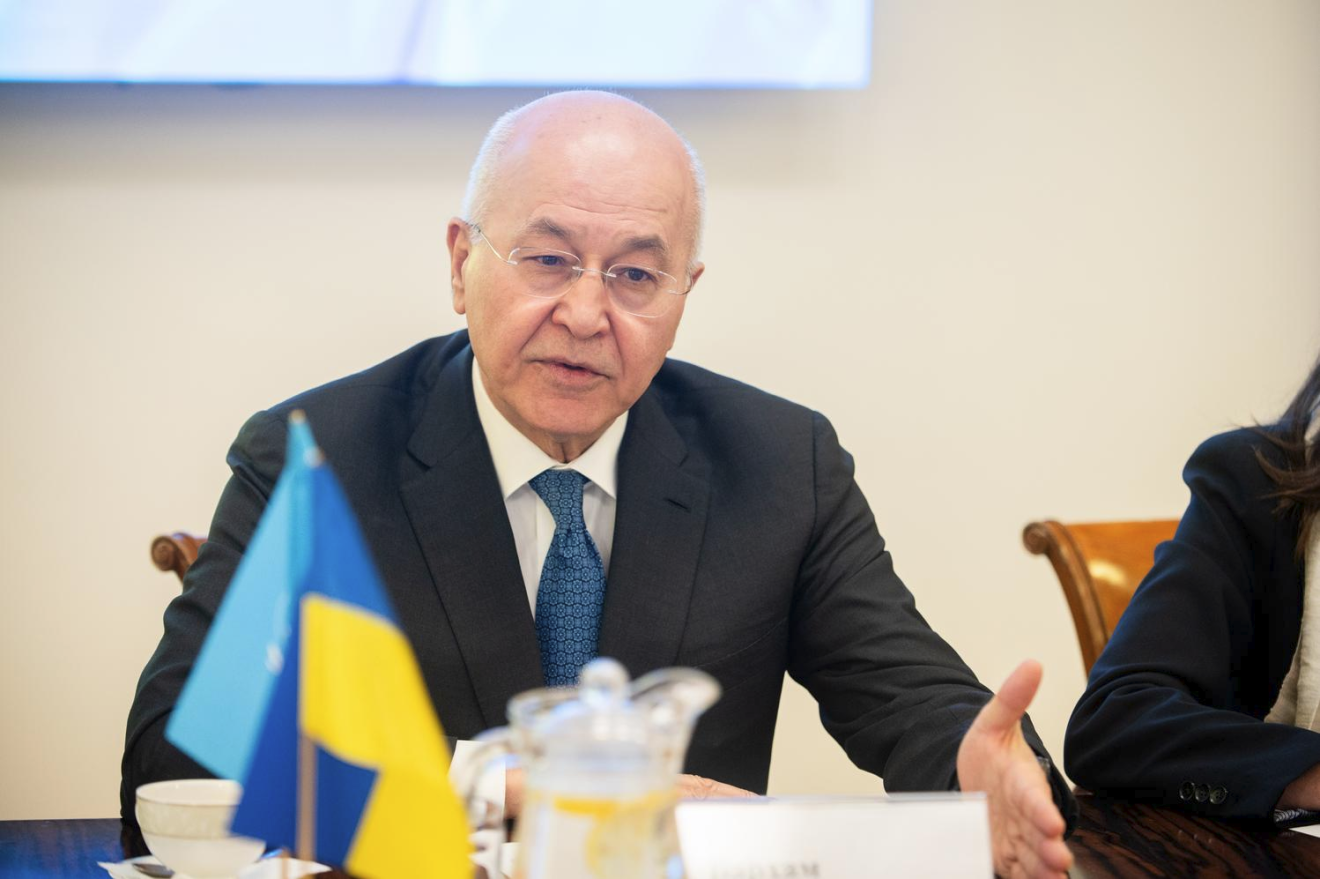
This is the first visit of UN High Commissioner for Refugees Bahrâm Salih to Ukraine, during which he visited the Kharkiv, Dnipropetrovsk, and Zaporizhzhia regions, familiarized himself with the work of transit centers, and spoke with families who were forced to evacuate due to hostilities.