
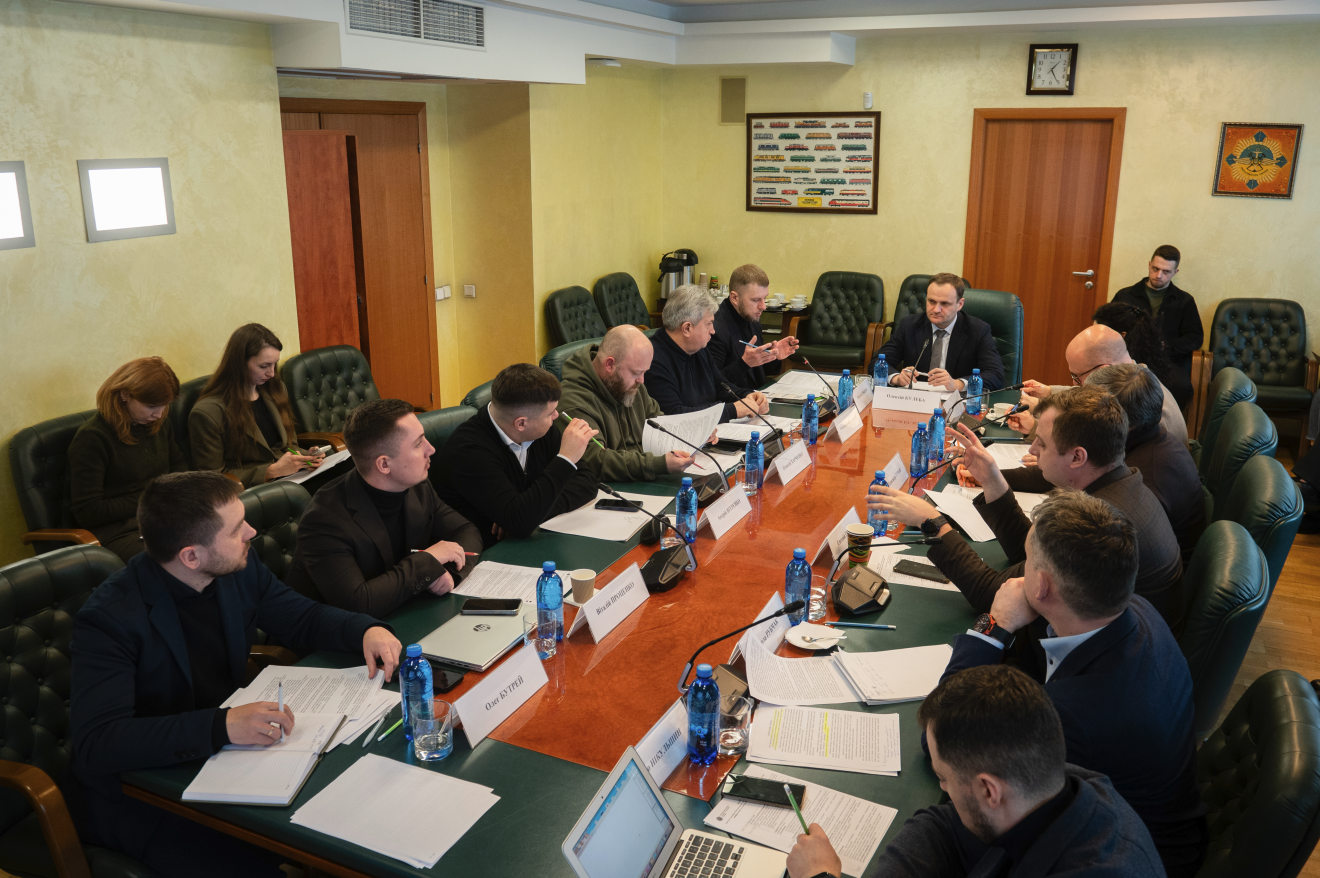
Deputy Prime Minister for the Restoration of Ukraine – Minister of Community and Territorial Development of Ukraine Oleksiy Kuleba held a meeting of the Working Group on the activities of utility companies in frontline and temporarily occupied territories. The meeting was attended by members of parliament, representatives of the Office of the President, central executive bodies, regional military administrations, the State Tax Service and the State Audit Service, law enforcement agencies, and all-Ukrainian associations of local self-government bodies.
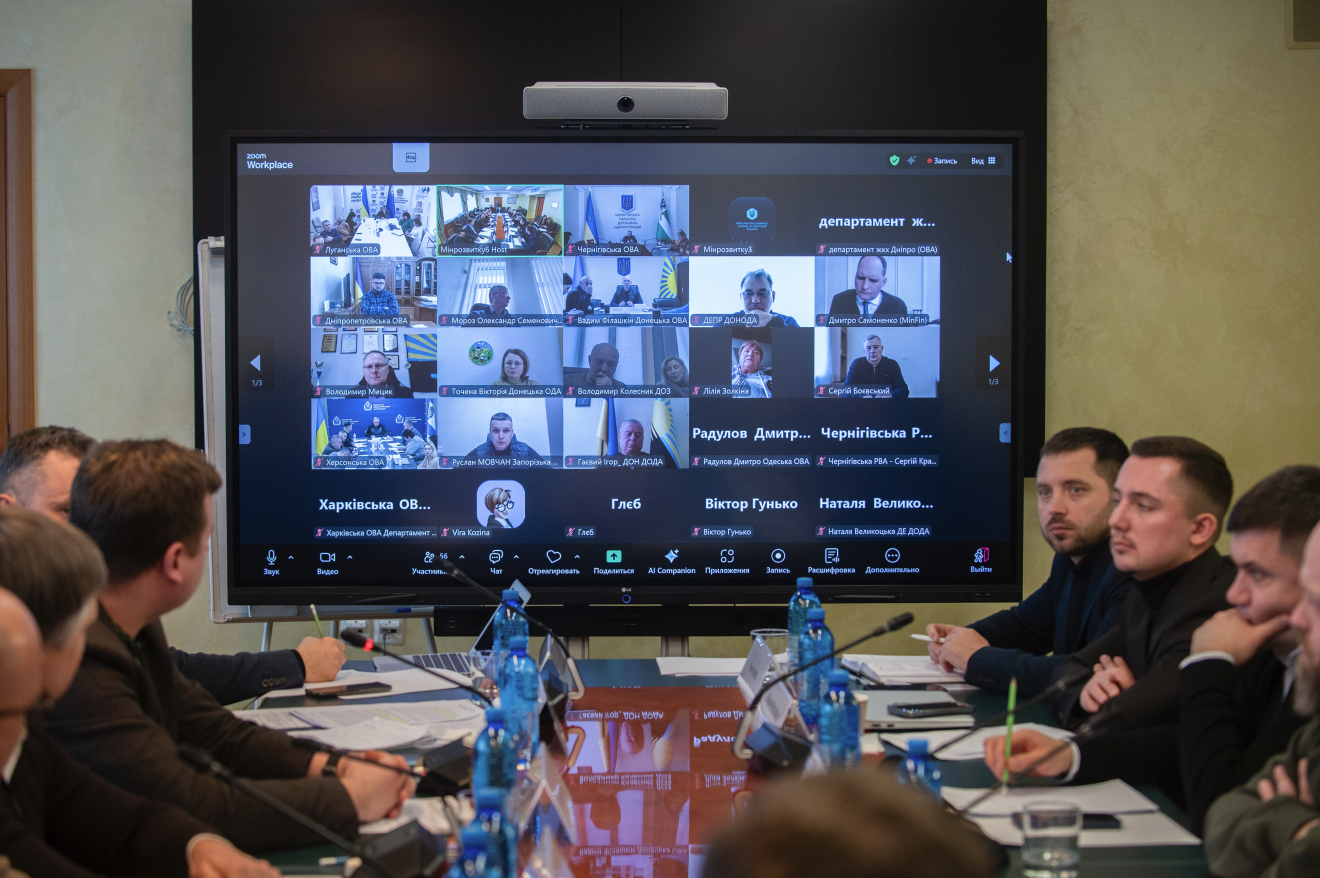
During the meeting, the issue of optimizing the work of municipal institutions in temporarily occupied territories was discussed, as their administrative buildings, property, and equipment are currently beyond the control of local authorities. Such enterprises are temporarily unable to function fully and provide basic services: housing and communal services, water supply, sewage, heat supply, and public amenities.
“The main thing we need to do is to preserve the teams and retain human resources. At the same time, given the limited financial resources, it is important to make rational use of the available opportunities and prepare in advance for a quick resumption of work after de-occupation,” said Oleksiy Kuleba.
Currently, 388 communities in 10 regions are in the zone of increased security risks: 165 are in areas of possible hostilities, 53 are in areas of active hostilities, 26 are partially occupied, and 144 are completely occupied.
As of the end of 2025, more than 600 enterprises, institutions, and communal property organizations, employing more than 9,000 people, have been relocated from 144 temporarily occupied communities in the Luhansk, Donetsk, Zaporizhzhia, and Kherson regions to safer regions.
Oleksiy Kuleba instructed the Luhansk, Donetsk, Zaporizhzhia, and Kherson regional military administrations to coordinate their work with communities and provide the Ministry of Development with information on the number of institutions in temporarily occupied territories that can be optimized, as well as on the expected impact on reducing state and local budget expenditures.
The issue of the structures of military administrations in regions with temporarily occupied territories, in particular Luhansk, Donetsk, Zaporizhzhia, and Kherson, was considered separately, taking into account the challenges and tasks associated with the temporary occupation. Regional military administrations were recommended to consider the issue of optimizing structural units whose functions are impossible to perform during the period of temporary occupation of territories, while simultaneously strengthening other areas – reintegration of territories, civil protection, humanitarian response, and elimination of the consequences of hostilities, in particular through the creation of separate local policy units – regional development and reintegration of territories, support for frontline territories.