

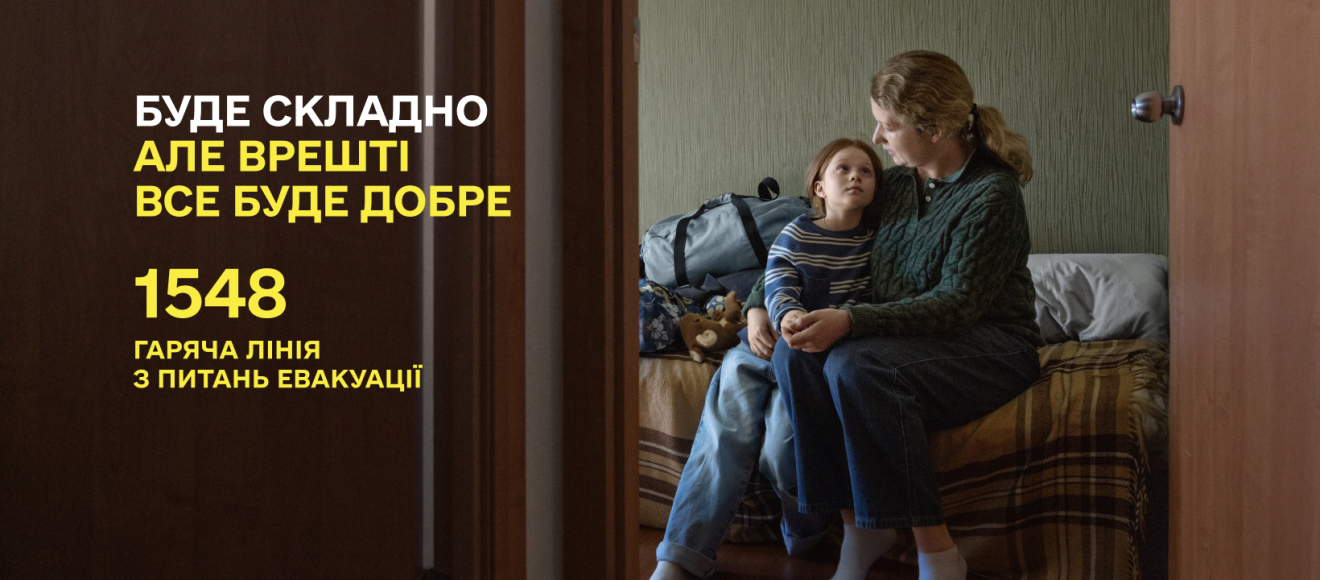
Step-by-step instructions for evacuating from combat zones were presented, providing answers to frequently asked questions from people planning to leave dangerous areas. These materials are part of a new information campaign, “It Will Be Difficult, but Everything Will Be Alright in the End,” which helps residents of frontline regions address their key concerns regarding evacuation.
According to the report “Survey on the State of Protection in Ukraine,” about 60% of residents in frontline and border communities fear leaving “with nowhere to go” and being left without financial support. Fear of the unknown, attachment to their homes and livelihoods, and uncertainty about where to live after leaving often become the main barriers to evacuation.
According to operators of the government’s 1548 hotline, more than 30% of people refuse to leave even when evacuation transport has already arrived. This is because they do not fully understand what awaits them next or where they will end up.
To provide people with concrete answers before they make a decision, a step-by-step evacuation guide has been created. It was developed as part of the campaign “It Will Be Difficult, But Everything Will Be Alright in the End.”
“We understand how difficult the decision to evacuate is: leaving your home, your normal life, and often part of your family. That is why we have launched an information campaign that answers questions such as: how does the evacuation take place, where are people being taken, who will help with housing, and what benefits will people receive? We want the fear of the unknown to no longer be a reason to remain in danger. Our goal is for everyone who makes this decision to know: they will not be left alone,” emphasized Oleksiy Ryabikin, Ukraine’s Deputy Minister of Recovery, Infrastructure, and Transport.
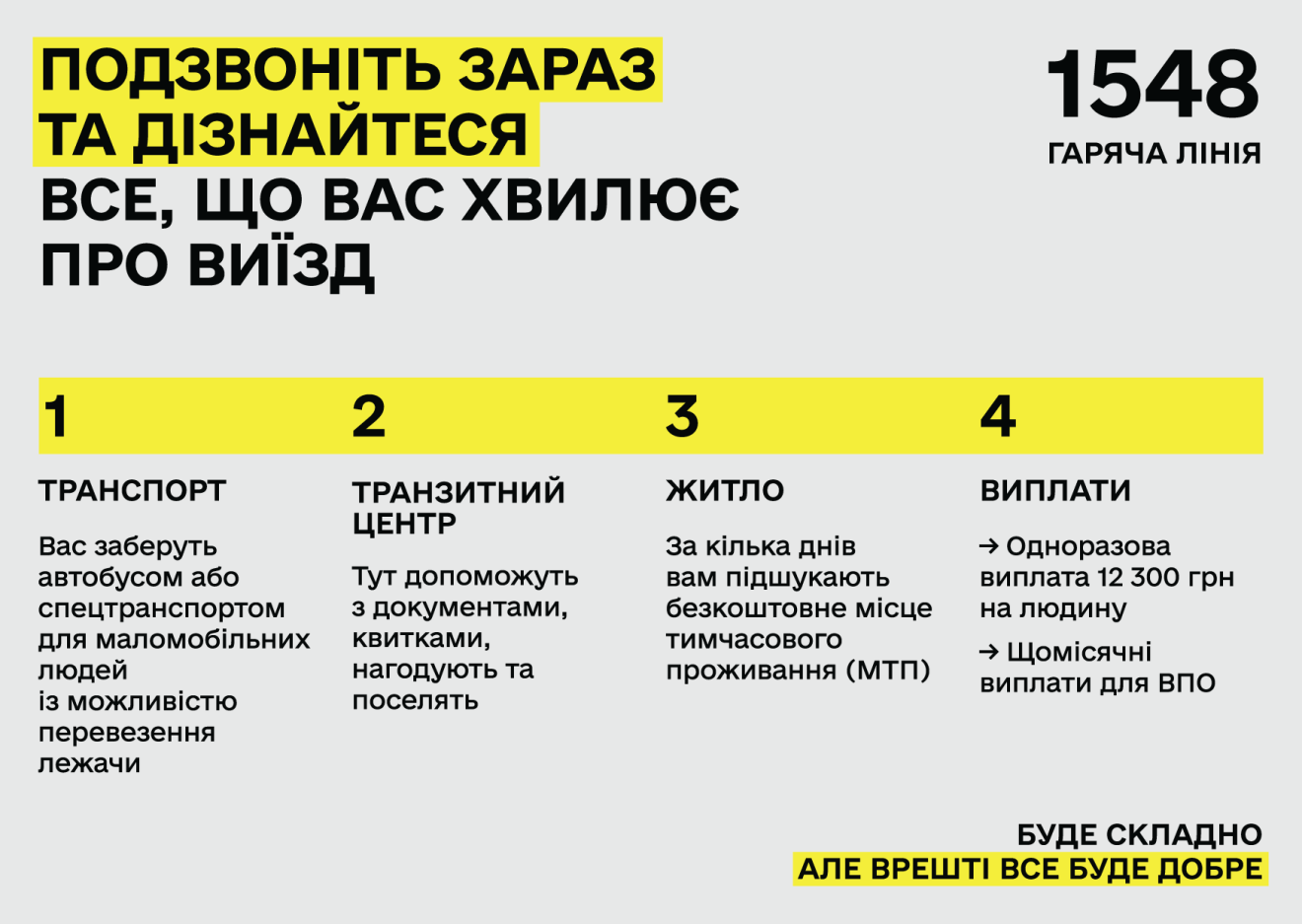
The guide explains the entire evacuation process in four steps:
- Transportation—evacuation is organized by bus or special transport. For people with limited mobility, transportation options are provided, including transport in a reclining position.
- Transit center—upon arrival, people receive assistance with documents, purchasing tickets, meals, and subsequent resettlement in safer regions of the country.
- Housing – Evacuees are helped to find free temporary housing in a safer region within a few days.
- Financial support – A one-time payment of 12,300 UAH is provided for each person, along with monthly payments for internally displaced persons (IDPs).
Since 2022, operators of the 1548 Hotline have handled more than 11,000 inquiries related to evacuation. In total, since the start of the full-scale invasion, the government hotline has received 1.4 million inquiries from Ukrainians on various issues.
Operators will help you navigate the available options and explain the next steps—from organizing your departure to receiving support upon arrival.
The decision to evacuate is never an easy one. But it’s easier for a person to make that decision when they understand that help is available to make the experience less stressful. That is why the Ministry urges people not to wait until there is no time left to think it over. People do not always reach out for help on their own. Most often, relatives or acquaintances of those remaining in frontline communities call regarding evacuation. You can ask questions or begin the evacuation process:
- by calling the toll-free number 1548;
- on the web portal 1548.gov.ua;
- via the Telegram bot @MinRe1548_bot;
- on Viber | WhatsApp | Telegram: +380 96 078 8433;
- by email at [email protected]
Step-by-step evacuation instructions can be found at this link
The information campaign is being implemented by the Ministry of Recovery, Infrastructure, and Transport of Ukraine in collaboration with the Ministry of Communities, Territories, and Internally Displaced Persons of Ukraine, with support from the “Partnership for a Strong Ukraine” Program, which is funded by the governments of the United Kingdom, Estonia, Canada, Norway, Finland, Switzerland, and Sweden.
For reference:
The “Partnership for a Strong Ukraine” Program is a multilateral donor initiative funded by the governments of the United Kingdom, Estonia, Canada, Norway, Finland, Switzerland, and Sweden. The Program’s goal is to strengthen Ukraine’s resilience in the face of Russian aggression by providing critical support to communities in cooperation with Ukrainian government authorities, civil society, the media, and the private sector.
Follow the Ministry’s social media pages on Facebook, Twitter, Telegram, Instagram, Threads та WhatsApp